

Algorithms Beyond the Horizon
Deep dives into GNC algorithms, sensor fusion, and autonomous systems for orbital and deep-space missions.
Algorithms Beyond the Horizon
Deep dives into GNC algorithms, sensor fusion, and autonomous systems for orbital and deep-space missions.

Latest from the Lab
- Rover Slip Estimation on Lunar Sand: Lab Test
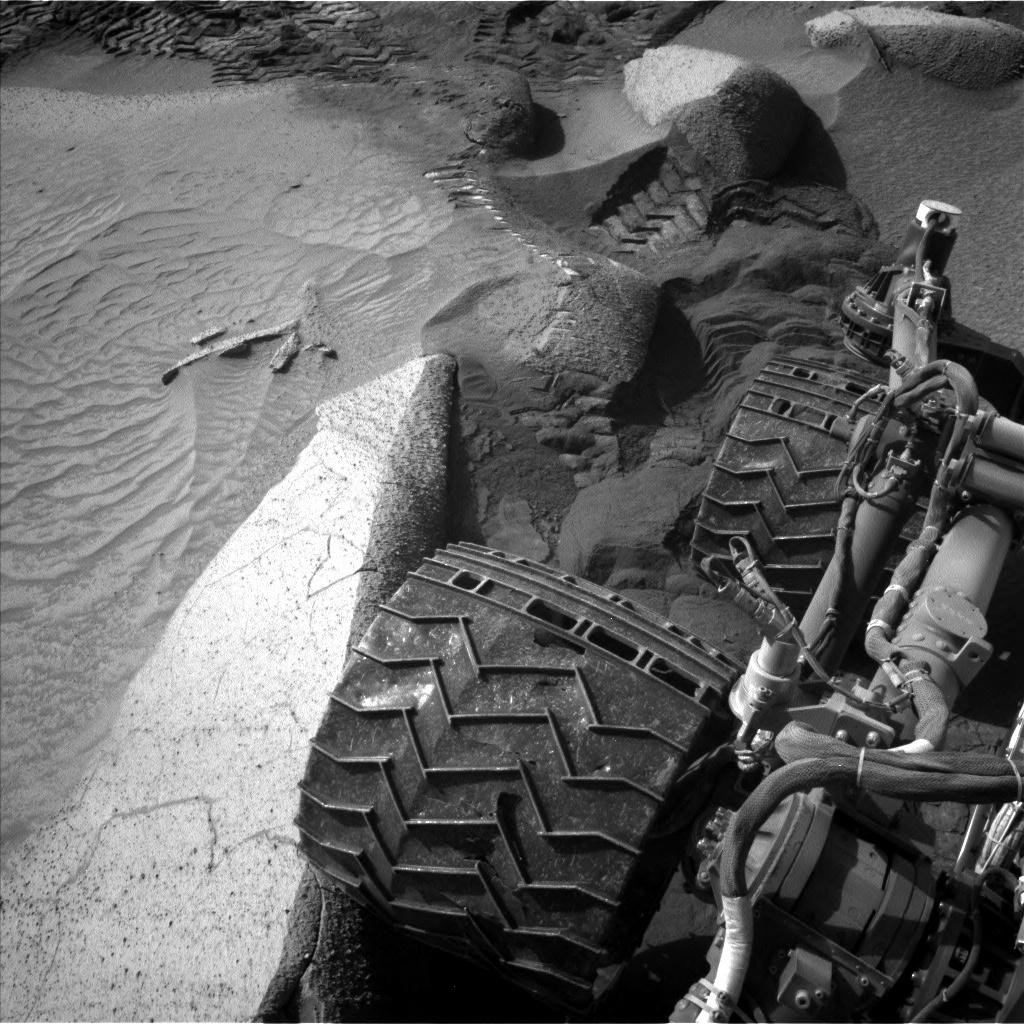
 Planetary rovers face significant mobility challenges on loose extraterrestrial terrains, making sand entrapment a critical threat. In this Lab Breakdown, we decode the science of Rover Slip Estimation. By benchmarking visual odometry derived from optical flow against the tangential velocity measured by wheel encoders, we explore how single-wheel testbeds isolate and quantify traction loss. This technical analysis of hardware integration and ROS 2 nodes is essential for developing robust hazard avoidance. Discover how autonomous systems detect wheel slip to survive the unpredictable surfaces of the Moon and Mars.
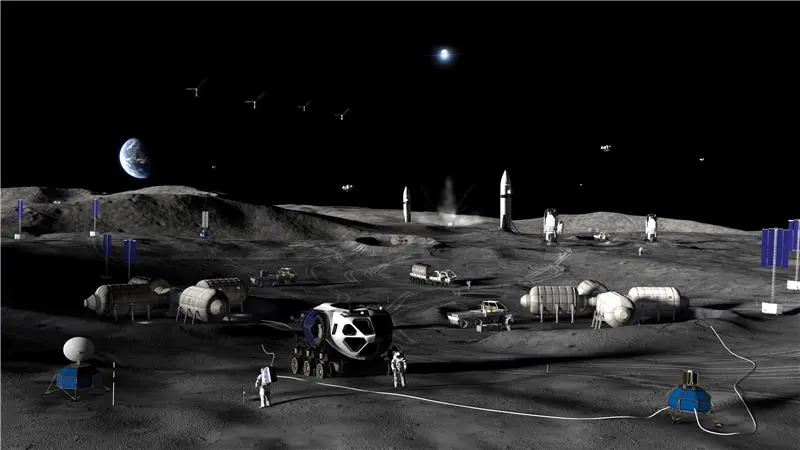
 - The New Lunar Gold Rush: How Commercial Rovers are Scaling Autonomous MobilityThe lunar exploration paradigm is shifting from multi-billion-dollar, Rad-Hard institutional rovers to agile, modular platforms built with COTS components. To compensate for strict SWaP constraints and reduced sensor redundancy, commercial vehicles like SAS’s LUVMI-X, Astrobotic’s CubeRover, and Australia’s Roo-ver rely on aggressively optimized software. By leveraging Light-Weight SLAM, Visual Odometry, and calculated algorithmic risk for high-tempo Hazard Avoidance, these software-defined rovers act as the automated logistics infrastructure for the emerging cis-lunar economy. This transition proves that scalable autonomous navigation is no longer a scientific luxury, but an indispensable engineering commodity for sustained In-Situ Resource Utilization (ISRU).
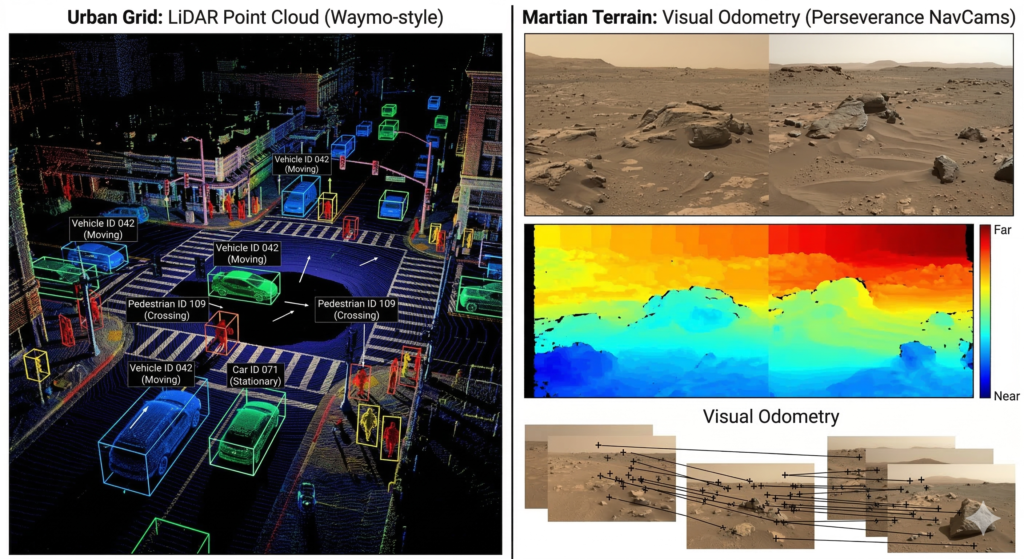
- What Self-Driving Cars Can (and Can’t) Teach Space RoversThe convergence of terrestrial autonomous vehicles and planetary rovers reveals profound algorithmic and architectural intersections. While self-driving cars process immense data using high-performance processors in structured environments, space rovers navigate unstructured, high-radiation terrains constrained by severe power limits and communication latency, historically relying on legacy rad-hardened hardware. Today, this paradigm is shifting. The aerospace sector is actively integrating automotive Deep Reinforcement Learning, hybrid computing, and photorealistic simulations to achieve robust autonomous navigation. Conversely, the automotive industry leverages space-proven fault-tolerance and remote teleoperation strategies to master complex urban edge cases, driving a mutual evolution in robotics.
Meet the founder

Hi, I’m Tommaso. Aerospace Engineering student & Rover enthusiast. Currently designing Mars rover prototypes at Politecnico di Milano with the PoliSpace team. I created Beyond The Joystick to bridge the gap between complex GNC algorithms and real-world robotics. From embedded systems to autonomous navigation, I’m here to explore how machines understand the unknown.
